At a chemical dosing station in a metal finishing plant, the maintenance supervisor saw pump pressure jump every time the batch tank was emptied. The PVC check valve on the discharge line appeared fine from the outside, but the internal ball had started to stick after months of contact with a warm acid mixture. The line gradually drained back into the suction tank, and the next dosing cycle began with trapped air. The question “Are PVC check valves good?” could not be answered with a simple yes or no. A PVC check valve is good when the plastic material matches the chemical, the pressure class matches the system surge, and the valve design is installed in the orientation it was designed for. It is less good when someone treats it as a universal one-way device that can handle any fluid, any temperature, or any reverse-pressure condition.
This article explains when a PVC check valve is a smart choice, when another material or another check valve design is better, and how to avoid the failures that create the reputation that plastic check valves are unreliable. The information is written from a manufacturing perspective, based on decades of producing thermoplastic valves, pipe, and fittings for industrial fluid handling systems.
What Makes a PVC Check Valve Good?
A check valve is an automatic valve that allows flow in one direction and closes when the fluid tries to move backward. No handle, actuator, or power supply is needed. The valve depends on pressure, gravity, or a spring to move the closing element. Because a PVC check valve is molded from plastic, it offers a combination of corrosion resistance, light weight, and low maintenance that metal check valves often cannot match in chemical service.
How a Check Valve Works
The principle is simple. When the pump starts, the outlet pressure pushes the ball, disc, or flap off its seat. When the pump stops, the reverse flow and gravity push the closing element back onto the seat. The sealing surface blocks return flow until the next forward pressure comes from the pump. The entire cycle is mechanical and does not require a human operator or an electrical signal.
A common misunderstanding is that a check valve prevents backflow in a plumbing sense. It prevents reverse flow through the valve itself, but it is not the same as a certified backflow prevention assembly. For many industrial lines this distinction does not matter. For potable water or cross-connection control, it matters a great deal. Installers should always confirm what local regulations require before selecting a PVC check valve for backflow-related duty.
Material Strengths and Limits
The term “PVC check valve” usually refers to a valve body molded from uPVC, which is unplasticized polyvinyl chloride. uPVC is rigid, strong enough for many low-pressure industrial lines, and highly resistant to a wide range of inorganic acids, alkalis, salt solutions, and oxidizing agents. It is not resistant to aromatic hydrocarbons, ketones, esters, or chlorinated solvents. It also has a lower service temperature limit than CPVC or PPH, so a uPVC check valve should not be used on steam, hot condensate, or process lines that run above roughly 60 °C for long periods.
Buyers often call all plastic check valves PVC check valves, but manufacturers produce several materials for different services. CPVC raises the temperature limit to about 95 °C. PPH provides better resistance to repeated mechanical stress and is common in chemical waste and electroplating lines. PVDF serves high-purity and high-temperature applications. The table below explains the basic material differences that affect valve selection.
Material selection affects the service life of a plastic check valve more than any other single factor.
| Material |
Typical Continuous Service Range |
Chemical Strength |
Main Limitation |
| PVC (uPVC) |
-10 °C to 60 °C |
Good resistance to many inorganic acids, alkalis, salt solutions, and water treatment chemicals. |
Poor resistance to ketones, aromatics, and chlorinated solvents; lower impact resistance at low temperature. |
| CPVC |
-10 °C to 95 °C |
Similar to PVC but can work with hot corrosive liquids and many aqueous chemicals at higher temperature. |
Higher cost; requires CPVC-compatible solvent cement or joining method. |
| PPH |
0 °C to 90 °C |
Excellent resistance to acids, alkalis, and many industrial effluents; good resistance to stress cracking. |
Lower stiffness than PVC; often needs more support in horizontal pipe runs. |
| PVDF |
-20 °C to 120 °C |
Very broad chemical resistance and low extractables for pure media handling. |
Expensive; normally used where PVC, CPVC, or PPH cannot survive the service. |
In short, a PVC check valve is good when it is used within its chemical and temperature envelope. It is also good when the pipeline pressure stays within the rated working pressure and when the flow velocity is high enough to lift the closing element fully but not so high that it causes erosion or chatter. Before choosing, installers should check the chemical resistance chart and pressure rating at the actual service temperature. A valve rated at 10 bar at 20 °C may have a lower allowable pressure at 50 °C.
Another useful rule is to confirm that the flow direction is marked on the body and that the line is arranged so reverse flow falls toward the closing element. Even the best PVC check valve will fail early if installed upside down or in a line with no clear direction of flow. A check valve is fundamentally a flow-direction control device, not a device that can make a badly designed piping layout safe.
Where PVC Check Valves Perform Well
PVC check valves are used in thousands of industrial and commercial installations because the combination of plastic material and automatic function solves real operational problems. The most common applications involve water, diluted acids, alkalis, and other reactive liquids that would attack carbon steel or require expensive alloy valves.
Chemical Dosing and Transfer Lines
In chemical dosing, a small PVC check valve is often placed on the discharge side of a diaphragm pump. When the pump stops, the check valve keeps the chemical in the dosing line instead of allowing it to drain back into the supply tank. This prevents air entry and keeps the next dosing cycle accurate. If the metering pump is below the chemical tank, a check valve on the suction line can also help maintain the prime, although a foot valve is more common for that purpose.
Electroplating and Surface Treatment Lines
Electroplating shops use plastic piping because the process baths contain acids, metal salts, and chemical additives that corrode metal piping. PVC check valves are useful on pump discharge lines, filter circuits, and rinse line recirculation systems. They prevent loss of prime when a filter pump is turned off and stop solution from draining backward through a filter chamber when the pump is stopped for maintenance.
Water and Wastewater Treatment
Wastewater treatment plants use PVC check valves on polymer make-down systems, chemical feed pumps, and low-pressure transfer lines. In these services, the valve is often selected for resistance to corrosive additives and ease of installation in a thermoplastic piping system. A ball check valve with a union connection is convenient because the ball and seat can be inspected without cutting the line.
Chemical Dosing
PVC check valves protect metering pumps from siphonage and keep dosing lines full during standby periods.
Filter and Pump Protection
Check valves prevent backspin and keep process lines primed when pumps stop or switch over automatically.
Treated Water and Effluent
Low-pressure plastic lines in treatment plants use check valves to prevent mixing between process streams.
In all these applications, the PVC check valve works well because the system is designed around plastic pipe, the operating temperature is moderate, and the flow direction is predictable. Complete plastic pipe systems also make it easier to install a check valve without creating galvanic corrosion or requiring special insulating kits.
Where PVC Check Valves Are Not Always the Best Choice
A good PVC check valve can still be the wrong product for certain jobs. The following conditions require a different material, a different check valve design, or a completely different backflow protection device.
Steam, Hot Water, and Compressed Air
uPVC is not rated for steam or for constant hot-water service above 60 °C. CPVC, PPH, or PVDF should be considered for higher-temperature liquids. Compressed air and other gases are also questionable for PVC check valves, especially where a fast pressure drop can create a rapid closing force that stresses the body. Gas service requires a valve rated specifically for compressible fluids, not a general-purpose liquid check valve.
Potable Water Backflow Prevention
Building codes and water-supply regulations usually require an approved backflow prevention assembly for connections between potable water and non-potable sources. A stand-alone PVC check valve is not a substitute for an approved device. Even if the check valve works properly, the installation may not meet the code requirement. For irrigation, a hose connection, or a chemical injection point connected to drinking water, use an assembly that is certified for backflow prevention and approved by the local authority.
High-Pressure or Severe Water Hammer Service
A PVC check valve has a pressure rating, but pressure surges can be much higher than normal operating pressure. When a fast-closing check valve suddenly stops a high-velocity liquid column, the resulting water hammer can exceed the valve body strength. The valve body may crack or the seat may be damaged. In long pipe lines, high flow velocities, or rapid pump start-stop cycles, choose a spring-assisted silent check valve design or install a slow-closing valve and consult the manufacturer for surge pressure calculations.
Check these conditions before putting a PVC check valve into a new or modified line.
| Service Condition |
What to Verify |
Risk If Ignored |
| Fluid temperature |
Compare the actual operating temperature with the pressure-temperature rating of the valve material. |
Softening, creep, permanent deformation, or leakage. |
| Chemical compatibility |
Use the manufacturer’s chemical resistance chart for the O-ring, ball, seat, and body material. |
Swelling, cracking, or stickiness of the closing element. |
| Pressure surges |
Estimate maximum start-stop pressure, not just steady pump pressure. |
Body fracture or damaged seating surface. |
| Flow direction |
Confirm that the arrow on the valve body points in the true forward flow direction. |
The valve closes when it should open and cannot protect the system. |
| Orientation |
Check whether the selected design can be mounted horizontally, vertically, or at an angle. |
The ball or disc never seats, causing continuous reverse flow. |
Procurement engineers sometimes assume that a PVC check valve is a maintenance-free product. It is low maintenance, but it should be inspected at scheduled intervals. If the line carries particulate matter, a strainer or filter should be installed upstream. If the ball or seat is worn, the valve should be replaced or repaired before it starts making noise or allowing reverse flow.
PVC Check Valve Types and Their Unique Behaviors
Not all PVC check valves behave the same way. The internal geometry controls the cracking pressure, the closing speed, and the installation position. The four most common configurations for plastic piping systems are ball check valves, swing check valves, wafer check valves, and foot valves.
Ball Check Valves
A ball check valve uses a free ball that sits in a machined seat. When forward pressure enters the inlet, the ball lifts and lets fluid pass around it. When flow reverses, the ball falls back into the seat and seals the passage. This design is simple and rarely jams if the ball, seat, and fluid are compatible.
Ball check valves work well in clean liquids, chemical solutions, and water. They are usually installed horizontally or vertically with the flow upward. In vertical upward flow, the ball lifts against gravity and falls back cleanly when the pump stops. If installed with vertical downward flow, the ball may not close fast enough to stop reverse flow.
For lines that are opened frequently for cleaning, a true-union body gives quick access to the internal parts without moving the pipe. This is the design we recommend for plants that perform frequent flushing or that need to verify the condition of the ball and seat.
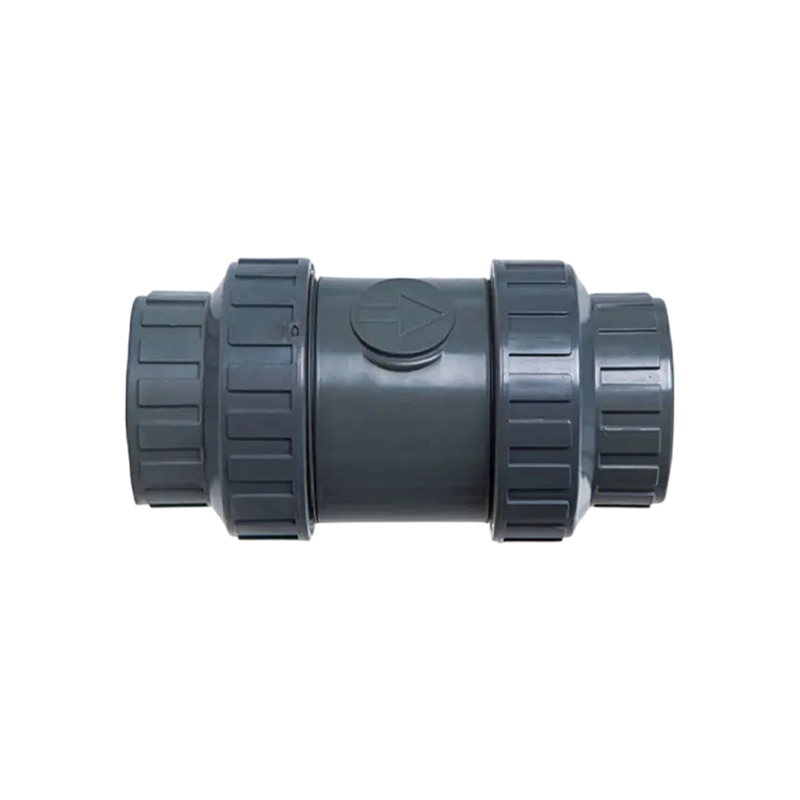 Union Type Ball Check Valve for Easy MaintenanceThis compact ball check valve features a true-union body for quick internal access during cleaning. Its minimal parts simplify maintenance, making it a practical choice for plants that need frequent flushing or inspection.View Product →
Swing Check Valves
A swing check valve has a hinged disc or flap that swings open as the flow passes. The disc closes by gravity and reverse pressure when the pump stops. Swing check valves generally have lower pressure drop than ball check valves because the flow path is more direct. They are best suited to horizontal installation with enough space for the disc to swing fully open.
If the line has low flow velocity, a swing check valve can be slow to close. That slow closing can reduce water hammer, but it can also allow a brief reverse flow before the disc seats. In systems where reverse flow must be stopped instantly, a spring-loaded ball or poppet design may be preferable.
Wafer Check Valves
A wafer check valve is a slim valve that sits between two flanges. It can be a swing type with a short disc or a dual-plate type with two spring-loaded plates. The wafer design is useful when axial space is limited. It does not require a long pipe space like a swing check valve with a flanged body.
For plastic piping systems, wafer check valves are most common in larger pipe sizes where a full-body plastic valve would be costly or heavy. The wafer body is clamped between the flanges, and the sealing ring creates the connection between the flange faces. Correct installation is important: the valve must be centered between the flanges, and the gaskets or sealing surfaces must be aligned with the pipe bore.
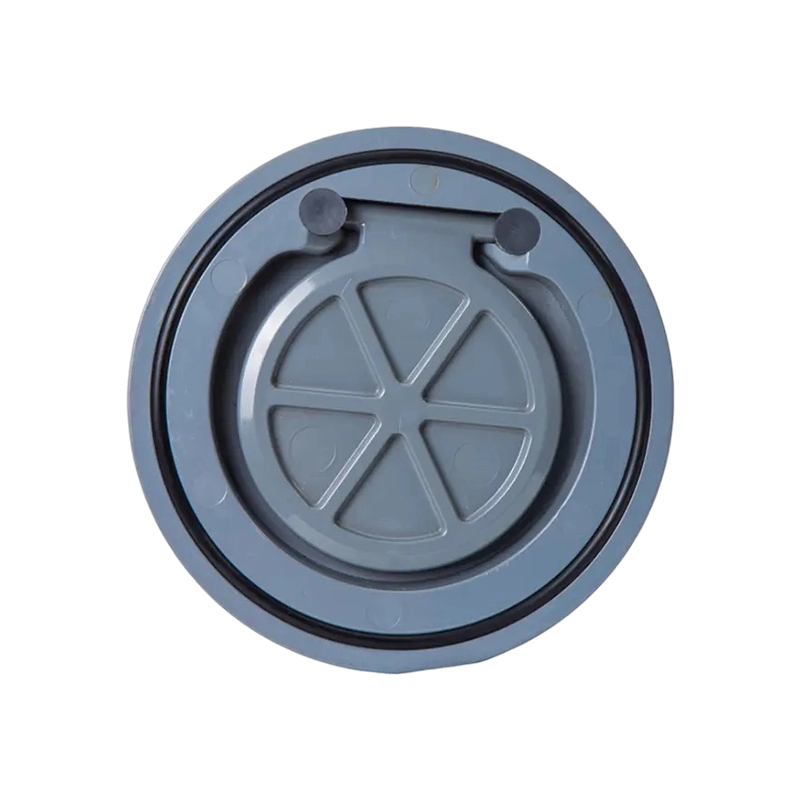 Corrosion-Resistant Wafer Check Valve for Large PipesThis short-face wafer check valve is lightweight and cost-effective, ideal for larger plastic piping systems. Its compact design allows easy installation between flanges while maintaining high corrosion resistance and reliable flow control.View Product →
Foot Valves
A foot valve is a special check valve mounted at the bottom of a suction line, often with an integral strainer. Its job is to keep the pump casing and suction pipe filled with liquid when the pump stops. When the pump starts, the liquid is already present, so the pump can build pressure quickly and does not need to draw air out of an empty suction line.
Foot valves are widely used on self-priming pumps, irrigation pumps, and transfer pumps that draw from tanks, sumps, or wells. The strainer prevents debris from entering the pump, but it must be cleaned periodically. A blocked strainer increases suction resistance and reduces pump flow.
Flanged foot valves are easier to remove from a pipe system for cleaning than threaded suction-end foot valves, especially in larger pipe sizes.
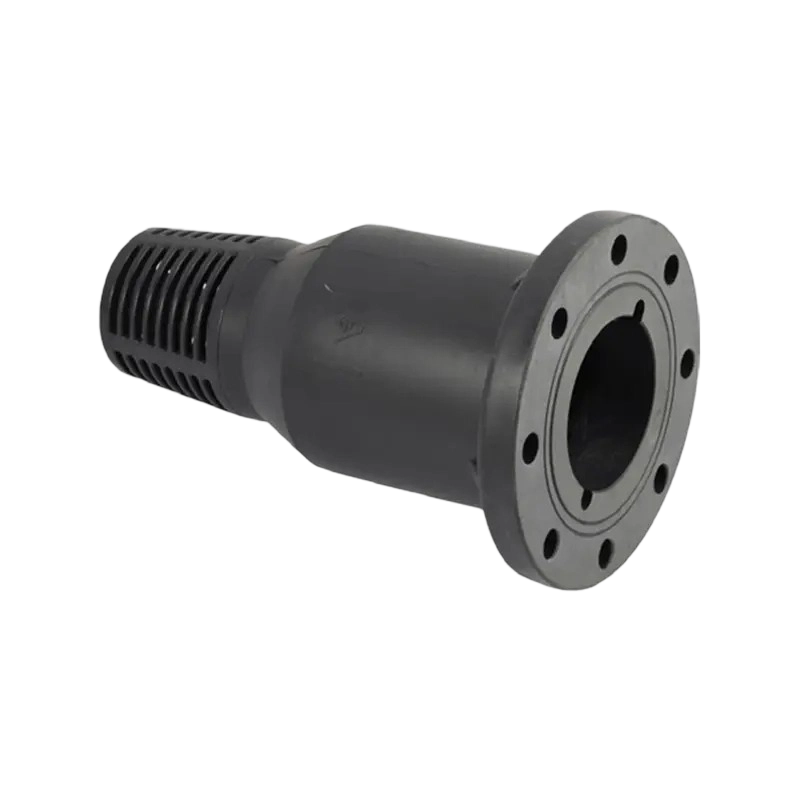 Flanged Foot Valve with Full-Spherical Ball DesignThe flanged connection simplifies removal for cleaning, especially in larger sizes. Its full-spherical ball resists blockage from particles, while the low-flow-resistance structure helps maintain efficient suction line operation.View Product →
Common PVC check valve designs compared by installation behavior and maintenance access.
| Design |
Flow Opening |
Installation |
Maintenance |
Best Suited To |
| Ball check valve |
Ball lifts from seat |
Horizontal; vertical upward with caution |
Can be inspected in true-union designs |
Clean liquids and chemical solutions |
| Swing check valve |
Hinged disc opens |
Horizontal preferred |
Requires space for body access |
Water, waste, and low-pressure process lines |
| Wafer check valve |
Short disc or dual plates |
Between flanges |
Compact but less convenient to inspect |
Flanged systems with limited axial space |
| Foot valve |
Ball or disc with strainer |
Vertical at suction line inlet |
Strainer must be cleaned regularly |
Pump priming and suction-line protection |
Pressure, Temperature, and Flow Behavior
Every PVC check valve has practical limits. A manufacturer can mold a valve body with a given wall thickness, but the final pressure rating depends on the material, the operating temperature, and the connection type. A socket valve, threaded valve, flanged valve, and union valve may have different pressure capacities even when the body is made from the same material and the same nominal size.
Reading a Pressure-Temperature Rating
The standard way to rate a plastic valve is to state the maximum allowable working pressure at a given temperature. For example, a valve may be rated 10 bar at 20 °C and 6 bar at 50 °C. If the process temperature increases, the allowable pressure decreases. Engineering teams sometimes make the mistake of selecting a valve only by its nominal pressure class without considering the actual fluid temperature. This is one of the most common procurement risks in plastic valve selection.
Cracking Pressure
Cracking pressure is the minimum upstream pressure needed to open the check valve. If the cracking pressure is too high, the valve may not open fully at low flow, causing a restriction. If it is too low, the valve may not close quickly enough when flow stops. Swing check valves typically have low cracking pressure. Spring-loaded ball check valves have a higher and more predictable cracking pressure. The right value depends on the pump discharge pressure and the minimum flow rate of the system.
Flow Velocity and Valve Sizing
A check valve should be selected for the flow range, not simply for the pipe size. If the flow velocity is too low, the ball or disc may flutter near the seat. This fluttering wears the seat and creates noise. If the flow velocity is too high, the closing element may slam into its stop and cause premature wear. The solution is to compare the actual flow rate with the valve manufacturer’s recommended flow range.
uPVC -10 to 60 °C
CPVC -10 to 95 °C
PPH 0 to 90 °C
PVDF -20 to 120 °C
The chart is a visual comparison of typical continuous service ranges for valve body materials. It is not a substitute for the manufacturer’s datasheet. The exact range can vary with valve series, wall thickness, flange type, and chemical environment. Always confirm the service range before placing the valve in an order.
Installation Rules That Decide Whether a PVC Check Valve Works
Many PVC check valve failures can be traced back to installation rather than manufacturing quality. The following rows represent the most common installation-related problems seen in process plants and pump stations.
Flow Direction
The arrow on the valve body must point in the direction of normal flow. A check valve arrow is not decorative. In a ball check valve, the arrow usually indicates the direction from the inlet seat toward the outlet chamber. Installing the valve backward prevents the ball from closing against the seat and blocks the forward flow.
Horizontal and Vertical Orientation
A swing check valve relies on gravity to return the disc to the closed position. If installed vertically with upward flow, the disc has no reliable way to close when flow stops. A ball check valve can work vertically if the flow moves upward and the ball falls back into the seat. A spring-loaded check valve is more flexible because the spring pushes the closing element to the seat regardless of orientation. Read the instruction label before making the final choice.
Pipe Protection and Support
Plastic valves are lighter than metal valves, but they still need proper support. A heavy line filled with liquid can place bending stress on a flanged PVC check valve and cause cracking near the flange. Support the pipe on both sides of the valve, especially when the valve is part of a line with expansion from temperature changes. Do not use the valve body to support the weight of long vertical pipe runs.
Joining and Torque
Threaded PVC check valves can crack if over-tightened. Use the correct PTFE tape or sealant and tighten only to the recommended amount. Solvent-cemented joints must be made with the right cement for the pipe and valve material. Flanges should be tightened in a crossing sequence to avoid unequal stress on the valve body. A thin plastic flange can distort if one bolt is tightened fully before the opposite bolt.
Direction
Mount the valve so the body arrow points toward the flow destination, not toward the pump.
Orientation
Horizontal lines are safest for swing and gravity-closing check valves.
Support
Support both sides of the valve so pipe weight does not pull on the body.
Jointing
Use the correct solvent cement, thread sealant, or flange gasket for the valve material.
Common Failure Modes and How to Prevent Them
Even a well-selected PVC check valve can fail over time. Recognizing the early signs of each failure mode helps maintenance teams replace the valve before a line is drained or a pump is damaged.
Sticking or Swollen Ball
If the chemical is not compatible with the ball material, the ball can swell, become soft, or remain stuck against the body. The same can happen if the temperature is above the recommended service range. A swollen ball may not fit into the seat, so reverse flow continues. The remedy is to check the chemical resistance of every elastomer and plastic component in the valve, not just the body material.
Chatter and Flutter
When the flow velocity is too low for the valve size, the closing element hovers between open and closed positions. This produces rapid movement, noise, and progressive wear of the seat. The solution is to select a valve with a lower cracking pressure, a smaller internal passage, or a spring that keeps the element pressed against the seat until flow is strong enough to open it fully.
Water Hammer and Body Cracking
A check valve closes suddenly when reverse flow begins. If the line is long and the flow velocity high, the kinetic energy of the moving liquid creates a pressure wave. The wave can momentarily double or triple the normal system pressure. A PVC valve body may crack because the surge exceeds the short-term pressure limit. Install a slow-closing valve, a surge vessel, or a spring-assisted silent check valve in lines with frequent pump trips.
Leakage Past the Seat
Dirt, scale, or crystallized chemicals on the seat can prevent the ball or disc from sealing. A line with suspended solids should have a strainer or filter upstream of the check valve. If leakage happens after a period of service, cleaning the valve may restore the seal. If the seat is scratched or corroded, the valve should be replaced.
Early warning signs and practical responses for PVC check valve problems.
| Sign |
Likely Cause |
Practical Response |
| Valve makes a tapping noise |
Ball or disc fluttering at low flow |
Increase flow, use smaller valve, or choose spring-loaded design. |
| Liquid flows backward after pump stop |
Foreign particle on seat or wrong orientation |
Clean the internal parts and confirm the flow arrow. |
| External crack near the joint |
Over-tightening, thermal stress, or water hammer |
Check surge pressure and support the pipe correctly. |
| Ball cannot move freely |
Incompatible chemical or high temperature |
Verify the chemical resistance and temperature rating. |
| Pump loses prime |
Foot valve blocked or suction line leaking |
Clean the strainer and inspect the suction pipe joints. |
How to Choose the Right PVC Check Valve
The selection process is more than matching a pipe size. A structured approach helps avoid the common situation where the valve fits the line but does not fit the actual service.
Step 1: Define the Fluid and Operating Temperature
Start with the exact liquid name, concentration, and temperature range. Use a chemical resistance chart to confirm that the body, seat, and ball materials are compatible. If the line alternates between several chemicals, choose the material that is compatible with the most aggressive chemical likely to appear.
Step 2: Define the Pressure Range
Record the normal pump pressure, maximum dead-head pressure, and any surge potential. The check valve should be rated at the maximum pressure the liquid can reach at the actual service temperature. Do not rely on the nameplate pressure rating printed for 20 °C unless the service temperature is actually 20 °C.
Step 3: Choose the Valve Type by Flow and Space
For small pipe sizes and clean liquids, a ball check valve is usually simple and reliable. For large flanged lines, a swing check valve or wafer check valve is often more practical. For pump suction lines, a foot valve is the right choice. If the line has vertical sections, a spring-loaded check valve may be required.
Step 4: Confirm Connection and Maintenance Access
Threaded, socket, union, or flanged connections affect both installation cost and maintenance convenience. A union-type ball check valve is useful for quick cleaning. A flanged foot valve is easier to remove than a bottom-mounted threaded valve. In a cramped space, a wafer check valve saves length but may be harder to inspect.
Example Selection Guide
Example guideline for common PVC check valve selection scenarios.
| Application |
Recommended Type |
Connection |
Main Reason |
| Chemical dosing pump discharge |
Ball check valve |
Threaded or union |
Compact, low leakage, easy to inspect. |
| Filter pump return line |
Ball check valve |
Union |
Quick access to remove a stuck ball. |
| Flanged process line with limited space |
Wafer check valve |
Wafer between flanges |
Short face-to-face dimension. |
| Pump suction line from tank or sump |
Foot valve |
Flanged or threaded |
Keeps the pump primed and filters debris. |
Once the design is chosen, the purchaser should request the valve’s datasheet, pressure-temperature curve, and installation drawing. A reliable manufacturer will provide the flow direction, recommended support spacing, and cleaning instructions. This documentation is also useful for the maintenance team after the valve is installed.
Testing, Quality, and What to Ask a Plastic Valve Factory
When a PVC check valve is bought from a factory, the physical quality of the molded body is only part of the story. The process control during molding, the machining of the seat, and the test method used by the factory determine whether the valve will perform in real service.
Material Verification
Not every “PVC check valve” is made from the same formulation. A quality factory can provide material certificates or chemical resistance data for the resin grade used. If the inlet and outlet connection surfaces are molded from a different material or a recycled compound, the valve may look the same but fail at a much lower stress level.
Dimensional and Visual Checks
The ball or disc must sit concentrically in the seat. If the seat is not round or the ball has flash from the mold, the valve will leak even when new. Dimensional checks should cover the internal bore, flange face flatness, and centerline alignment. A valve that is visually clean and free of surface cracks or weld lines is much more likely to meet its rated pressure.
Pressure and Leak Testing
Individual pressure testing is the strongest way to confirm the quality of each valve. Factory test procedures may include hydrostatic shell tests, seat leakage tests, and air tests under water. The buyer should ask which test is performed on every valve and which test is performed only on samples. A manufacturer that hydrostatically tests the complete body at a pressure above the rated working pressure demonstrates a higher level of process control.
Documentation and Traceability
Industrial buyers often need more than a valve body and an invoice. They need production batch records, material certificates, and a record of the pressure test. This is especially important for projects that are inspected by third-party engineers or that require traceability back to the manufacturing date. A factory with ISO 9001 quality management and a pressure piping component license is more likely to maintain these records consistently.
Ningbo Baodi Plastic Valve Co., Ltd. began manufacturing industrial plastic valves in 1979 and obtained an assessment from the former Ministry of Chemical Industry in 1983 for an early plastic diaphragm valve design. The company later introduced the one-piece flanged ball valve and expanded into CPVC piping systems. This history matters because it shows that a plastic valve factory does not simply buy finished valves and resell them. It designs the body, controls the molding process, tests the finished product, and supplies a range of piping materials so that the valve and pipe can be matched in the same project. For a PVC check valve, this integrated approach helps reduce the chance that a valve is joined to an incompatible pipe material or installed with the wrong pressure class.
Frequently Asked Questions About PVC Check Valves
Are PVC check valves good for backflow prevention?
A PVC check valve is good for preventing reverse flow through the valve body in an industrial piping system. It is not a substitute for an approved backflow prevention assembly in a potable water supply. For irrigation, chemical injection, or any connection where cross-contamination is possible, use a backflow preventer certified for that application.
What is the maximum temperature for a PVC check valve?
A standard uPVC check valve is generally rated up to about 60 °C for continuous pressure service. CPVC raises this to about 95 °C, PPH to about 90 °C, and PVDF to about 120 °C. The actual maximum temperature is lower when the fluid pressure is high, so check the manufacturer’s pressure-temperature chart for the selected size and connection type.
Can a PVC check valve be installed vertically?
Some PVC check valves can be installed vertically, but the direction of flow matters. A gravity-closing ball check valve works vertically when the flow is upward because the ball falls back into the seat when the pump stops. A swing check valve is usually not suitable for vertical installation. Spring-loaded check valves are more flexible and can work in horizontal, vertical, or angled orientations.
Which is better: a ball check valve or a swing check valve?
A ball check valve is often better for small pipe sizes, chemical dosing lines, and systems that need a tight seal with low leakage. A swing check valve is often better for larger lines and clean water service where a lower pressure drop is desired. The best choice depends on the available space, flow rate, required cracking pressure, and cleaning schedule.
How long does a PVC check valve last?
There is no single service life because the valve depends on fluid compatibility, temperature, flow velocity, and maintenance. In a mild water line within the rated pressure and temperature, a PVC check valve can last for many years. In an aggressive chemical line near the upper temperature limit, the ball or seat may need replacement after months. Regular inspection is the only reliable way to judge remaining service life.
What pressure rating should I choose for a PVC check valve?
Choose a pressure rating that is higher than the maximum expected line pressure, including pressure spikes from pump startup and water hammer. Many uPVC valves are rated around 10 bar at 20 °C, but the allowable pressure falls as temperature rises. If the system normally operates at 6 bar but has a surge of 10 bar, use a valve with a higher rating or add surge protection.
Can a PVC check valve be repaired instead of replaced?
It depends on the construction. Union-type ball check valves and some true-union designs allow the ball, seat, or O-ring to be replaced. Flanged or solvent-cemented valves are more difficult to repair and are often replaced as a complete unit. Keeping spare balls and seat rings for common sizes can reduce downtime.